Showing posts with label Genre: Non Fiction. Show all posts

Tuesday, April 7, 2015

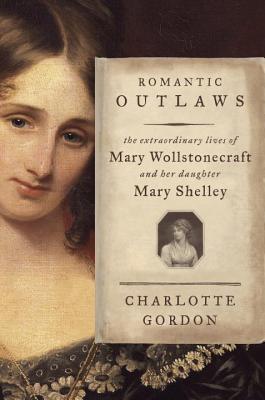
Romantic Outlaws by Charlotte Gordon

I received a galley of this novel from NetGalley for review. This in no way affected my opinions.

This biography is to Mary Wollstonecraft and her daughter Mary Shelley what The Brontës by Juliet Barker is to Charlotte, Emily, and Anne Brontë. Meaning: if there is one book you want to read on the two Marys, this is the one.

One unique thing about the book was the alternate chapters. Instead of talking about both women in a chapter, Gordon instead would dedicate one chapter to each woman at a period in her life. We literally go back and forth between the two.

Wollstonecraft, unfortunately, did not have as long a life as her daughter. Because of this we 'spend more time' with her in order for the chapters to remain even. We're more focused on certain periods of her life, whilst with Mary Shelley it's more spread out.

While a tome, it was very readable. I never felt bored or felt that there was a bunch of information being thrown at me. A great biography about two incredible and revolutionary women.


Sunday, August 18, 2013

The 50 Greatest Red Sox Games by Cecilia Tan & Bill Nowlin

I received a galley of this novel from NetGalley for review. This in no way affected my opinions.

The 50 Greatest Red Sox Games would be better used as a reference book rather than the sort of book you would read in order – that becomes tedious after a while.

Cutting down over 100 years of games down to 50 memorable ones was, I'm guessing, not an easy task. There is a list of games at the end of the book that didn't make the cut, and any one of them would have fitted right in to the final 50. Not all of the 50 games featured here ended well for the Red Sox, but they were still games that are etched in Sox lore.

One of the chapters I appreciated was the chapter that highlights game six of the 1986 World Series, a game that before 2004 memories led to nothing but anger for Sox fans. What I appreciated was how it talked about how messed up it was that Buckner ended up being the goat for the whole thing, when really he should have never been in the game in the first place. That I knew, what I didn't know, but learned from this book, was that immediately following the loss, Buckner didn't take the blame. Actually, it was years later, after endless re-showing of that ill fated play, and yahoos talking about that stupid 'curse' (which I never believed), that the play became something bigger than the game. Overnight, it seemed, people forgot about all the blunders that led to that play, and the fact that the manager refused to take an injured Buckner out of the game.

I would recommend this to people who are new fans, or just baseball fans in general that don't know much about the history of the Red Sox. It covers from the 1903 Boston Americans (before Fenway even existed) to the 2004 World Series Champs.


Thursday, August 8, 2013

Naples '44 by Norman Lewis

I received a galley of this novel from NetGalley for review. This in no way affected my opinions.

I've been wanting to read this book for a while, so I was thrilled when I got to read a reissue.

Naples '44 is based on the diary of British soldier Norman Lewis, who was a part of the British Intelligence Corps in Naples after the Nazi occupation. Through Lewis' eyes we see the immediate after effects of the Nazi occupation, and through the next year we also see how the locals did what they had to to survive.

At first, the Italians are happy that the Nazis are gone, but there are some who do not care either way, and after a period of time, the Allies have pretty much worn out their welcome. You can see that the Italians just want their country back, and want to start rebuilding.

I really liked the culture clash we saw. Lewis wasn't afraid to admit that he didn't always understand the things that the locals did – the traditions and all that. He also wasn't afraid to admit a few blunders.

Towards the end of the account, Lewis has achieved a great respect for the Italians, and admires their strength. He even says that if he could be born another nationality, he would want to be born Italian, which shows how great his view of the Italians had grown over the year. He ends the account with his last day in Naples, and how he will miss it and the friends he made.

Naples '44 is essential reading for someone like me, who is absolutely fascinated with Italy during the war. Highly recommended, as it is very readable and not very long.


Wednesday, April 3, 2013

The Deadly Sisterhood by Leonie Frieda


I received a galley of this novel from EdelWeiss for review. This in no way affected my opinions.

There is nothing I like better than reading about empowered women who fought against the restrictions of their time. So, when I heard about The Deadly Sisterhood more than a year ago, I immediately put it on my wish list. And I was thrilled when I was able to read an advance copy.

The Deadly Sisterhood is mainly about eight women from the Italian Renaissance. And while the focus is on these eight women, we do hear about others.

The main point of this book was to see the lasting legacies the women of this time left: whether it was from their own extreme or lesser actions, or through their descendants.

The boldness of these women showed. When the last of the eight women featured here died - Isabella d'Este -  with her died an end of an era. An era where women where able to take control, and even manipulate to gain power and status. After the death of Isabella, the world in which she lived changed, and became a place she and her contemporary women would have felt stifled in.

One of the women featured in this book is Caterina Sforza. I had read a fantastic biography about her last year, but was still thrilled that she was included here. I actually learned a bit more about her, not surprisingly considering the depths of this woman’s amazingness could not all be included in one book.

The Deadly Sisterhood is highly recommended to those interested in the Italian Renaissance and women's history. How appropriate that I finish it during Women's History Month.


Wednesday, February 27, 2013

Eighty Days by Matthew Goodman


I received a galley of this novel from NetGalley for review. This in no way affected my opinions.

Eighty Days was a fascinating account of two women's race around the world, that of Nellie Bly and Elizabeth Bisland.

The race was not intended to be a race at all. The idea was to outdo the fictional character Phileas Fogg's eighty day journey around the world, an idea that Bly had been pressing to the World, the paper in which she worked. She was finally given the ok, and preparations had been set. However, The Cosmopolitan caught wind of this and decided to send one of their own, Elisabeth Bisland, to race Bly. Bly set out east, and Bisland set out west.

There's no doubt that Bly's quest was the most reported on. I honestly did not know about Bisland until I came across this book. I knew all about Bly's trip around the world, but was flabbergasted that there was another woman doing the very same thing at the very same time.

The book chronicles both women's trips around the world, the ups and downs, and the unexpected road blocks. It also gives insights to the places and people both women encountered.

Both women completed their journeys, with Bly beating Bisland by a few days. Bly had become a celebrity, while Bisland gained only a little fanfare.

However, one thing they both accomplished was what they did for other women, especially in the field of journalism. More women were hired in the aftermath of the race, and the 'new American woman' was established.

One thing that bogged the book down was the endless detail. The text would sometime veer off into pages and pages about the city either women was visiting. It was nice and all, but it felt like way too much. I skipped much of this, honestly. It seemed as though there was not enough to write about either woman's trip to make a whole book, hence all the unnecessary detail.

Still, this was an informative book, and like me, you can always skip the stuff I did.


Wednesday, January 2, 2013

Georgette Heyer by Jennifer Kloester


I received a galley of this novel from NetGalley for review. This in no way affected my opinions.

A decent biography about an insufferable person.

I'm not big on Georgette Heyer's books anymore, but I'm always interested in learning about the real lives of authors. Well, Ms. Heyer and I would not have been friends, let's just say that.

The book in itself had problems keeping my attention. Dry biographies that basically just state fact after fact bore me to tears. I can find that stuff out on the internet. I never felt engaged, and often skimmed pages.

The book was highly researched, and it shows, almost too much. There aren't that many Heyer bios out there, so I recommend this if you want the facts of her life. Unfortunately  there's not much else I can think of to say.


Wednesday, November 21, 2012

Constance by Franny Moyle

I received a galley of this novel from NetGalley for review. This in no way affected my opinions.

Constance: The Tragic and Scandalous Life of Mrs. Oscar Wilde is a good account of the life of an often overlooked figure.

I admit, I've been interested in the life and work of Oscar Wilde for years, but have never given a second thought to his wife Constance. Shame on me! I feel like I need to apologize to her. She was a woman ahead of her time: intelligent, progressive, for women's rights, etc. She was also a children's writer.

From reading this biography I learned that Constance was an incredibly real person. She had her flaws, but some of them can be excused for the time she lived in. I also learned just what her husband's trial and eventual imprisonment did to her.

In the book are exerts of unpublished letters that Constance wrote to friends and family. Also included are some fabulous photos that I have never seen before.

Constance Wilde was truly an inspiring woman whose life ended much too soon. She was incredibly eager to learn anything and everything, not to mention wanting to do anything and everything. She understandably wore herself out. And even when her husband went to prison, she still continued to support him, showing just how compassionate she was.

Highly recommended biography. I'm thrilled that Constance's story is finally out there.


Wednesday, September 26, 2012

The Brontës by Juliet Barker


I received a galley of this novel from NetGalley for review. This in no way affected my opinions.

I haven't read any other non-fiction book about the Brontë family, but I can tell you that this is the Brontë biography to start with. Yes, it's a tome, but  it's oh so worth it. It completely erases the myths and legends surrounding the family, and  relies on fact (or as close as you can get to fact) using letters and other documents.

This book may end up depressing some people who like to believe the embellished sensationalism that are rooted in rumor. However, for someone who wants to know the real Brontës, then this book is a dream. We're shown the family as they are, flaws and all, and believe me, none of them are perfect.

Stripped down are the words of Elizabeth Gaskell in her 'biography' of Charlotte, and even the words of Charlotte are examined, especially in reference to her sisters. Charlotte was grossly unfair of Anne in particular, and in Charlotte's letters, a view of Anne emerged that is untrue. The Brontës does justice to Anne, showing her as an intelligent being, when Charlotte gave her no credit in that regard. I must admit that I've always been sort of a defender of Anne; I always felt as if she got the short end of the stick, in no fault of her own.

This book is about all the Brontës, not just about the three sisters. Granted, I basically read this to read about the sisters, but reading about Patrick, and Branwell, as they truly were, was fascinating. The stereotype of Patrick being a strict tyrannical father was shot down. The view of Branwell always being a drunk and screw up is also diminished.

Of course, we also find out that some of the sensationalist events in Brontë lure were true, such as Branwell's affair with his employer's wife, and Charlotte's infatuation with Monsieur Heger. Reading the details of both gave shape to how these significant events shaped each respective sibling's life.

What was also fascinating, and something I never gave much thought to, was the imaginary worlds that the siblings created. Charlotte and Branwell with their Angria world, and Emily and Anne with their Gondal world. They created worlds and characters, wrote up histories for them, write poetry that were part of these worlds, and it's evident that the sisters' earlier work on these imaginary worlds were a huge part of their future novels. There are characters and events in the Angria and Gondal worlds that show up in disguise in the seven novels, along with personal events and real life people in their lives. Reading in detail about these worlds and the sisters' real life experiences gives me a new appreciation for their novels.

I could go on and on about everything I learned from the tremendously thorough biography, but I'll stop here. I don't think I need to do any more convincing.


Wednesday, June 20, 2012

Mrs. Robinson's Disgrace by Kate Summerscale

I received a galley of this novel from NetGalley for review. This in no way affected my opinions.


Mrs. Robinson's Disgrace is a very unique, first-hand look into the life of a middle class, married woman in Victorian Britain.

Over the course of several years, Isabella Robinson keeps a diary, in which she describes her infatuation with a a married doctor named Edward Lane. Isabella's husband Henry finds this diary whilst snooping around, and uses it to bring about a petition for divorce.

This book strongly showed the double standard between men and women, husbands and wives, during the Victorian era. For a husband to obtain a divorce, he needed to prove his wife was unfaithful, and produce two witnesses. For a wife to obtain a divorce, she had to prove that her husband was cruel and/or violent, or that he had deserted her. So, a husband could carry on an affair and produce several illegitimate children (ex. Henry Robinson), but a wife could not get a divorce based just on that.

The first part of the book sets up the back story, and shows us the events from 1850-1856, which includes her words about Dr. Lane. Isabella was definitely someone who needed attention and affection, which her husband did not provide for her. In fact, she was starved for it, which is evident from her diary entries. This caused her to have above friendly feelings for a few different men, which also included her sons' tutor.

The second part of the book was the trial and outcome. Isabella's most private thoughts were read aloud to a packed courtroom. I was enraged and mortified for her as her words were scrutinized. Not only was the supposed affair had to be proven or not, but Isabella's sanity was also an issue. It was even brought up, at one point, that all women who wrote were insane, including prominent novelists. Ludicrous. I guess I'm insane right now.

Whether or not the affair between Edward and Isabella existed, or whether the words Isabella wrote were just from her own imagination were irrelevant. She was treated unkindly by everyone involved. Her privacy was invaded, her sanity was questioned, and her reputation was destroyed. The double standard between men and women was even more disgusting then than it is now, and this book was a good look into the hypocrisy of the Victorian era.


Wednesday, April 4, 2012

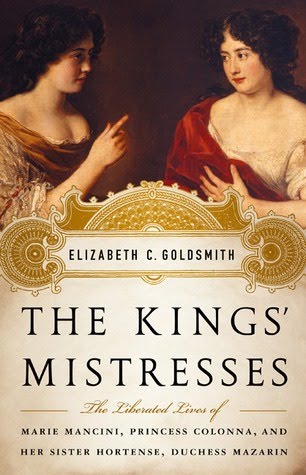
The Kings' Mistresses by Elizabeth C. Goldsmith

I received a galley of this novel from NetGalley for review. This in no way affected my opinions.


The Kings' Mistresses is a fabulous account of Marie and Hortense Mancini, two of the most scandalous and free-thinking women of their time.

Marie and Hortense were the nieces of Cardinal Mazarin. The two, along with their siblings were born in Rome and brought to Paris: Marie was 13 and Hortense, 9. Their uncle arranged marriages for both of them – Marie first, because she was a little too cozy with King Louis XIV.

However, both Marie and Hortense's marriages didn't go well. After producing several children, both of them ditched their husbands. Hortense left her mad and scheming husband in 1668, and Marie left her husband four years later, with fear that he would kill her otherwise.

Both sought refuge in different places, but not the same. Marie went from convent to convent, finally ending up in Madrid, and didn't have the freedom that Hortense ended up having in London after she became the mistress of Charles II.

However, both accomplished what they set out to do: never to return to their husbands. Whatever roadblocks were hurled their way, whatever lawsuits were produced, and whoever tried to intervene, the sisters somehow managed their goal. The sisters ended up having major influence on the women of their time. Their escapades were reported all through Europe and it got people talking. Whether people were on the sides of the sisters or their 'poor, deserted' husbands, people talked. And when people start talking about an issue, things start happening.

The result, eventually, of the sisters flights ended up having was the discussion of just how much power a husband should have over his wife. Unhappy wives soon started following the Mancini sisters' examples by standing up and saying that they shouldn't have to stay in a disastrous marriage and should have the right to live separately from their husbands.

The two sisters ended up writing memoirs, which were quoted in the book. I so happen to have said memoirs, and can not wait to get to them now.

The Kings' Mistresses was a great biography on two women who stood up for their rights during a time when women didn't have any. At times, reading the book, I was infuriated by just how little power the women had, how much Marie's husband toyed with her: locking her up in convents (and at one point, a prison!). Through the decades, both husbands would demand their wives return to them, not because they cared for them, but because of their own wounded prides. Neither husband won, and to that, I say: Hooray!


Wednesday, November 2, 2011

The Tigress of Forli by Elizabeth Lev

I received a galley of this novel from NetGalley for review. This in no way affected my opinions.


A readable biography about a truly fascinating woman.

Caterina Sforza was the illegitimate daughter of Galeazzo Maria Sforza, Duke of Milan and Lucrezia Landriani. As was usual of illegitimate children of the time, Caterina grew up in her father's home, raised by her stepmother Bona of Savoy.

I could be here all day telling you all the amazing – and sometimes ruthless – things Caterina did. She was married three times and gave birth to nine children. In 1484, while seven months pregnant, Caterina occupied the fortress of Castel Sant'Angelo after Pope Sixtus IV (her husband's uncle) died. She did this in order to guarantee safety and security to her family.

I admire how Caterina often stuck to her guns, even with a couple of ungrateful children, and then having the Borgias breathing down her neck – it was around this time that she gained the nickname Il Tigre. And after a tumultuous life, including being imprisoned, Caterina was able to have some peace with her children and experimenting with her hobby of alchemy. However, it didn't last long. She contracted pneumonia and died at the age of 46.

This biography of the great Caterina Sforza was, as I said, very readable. It wasn't stuffy at all, and the pages just flew by. Anyone interested in the Italian Renaissance and fierce historical women shouldn't be disappointed.


Wednesday, October 19, 2011

Fenway 1912 by Glenn Stout

I received a galley of this novel from NetGalley for review. This in no way affected my opinions.

So, the 2011 Red Sox season landed on a bad note, to put it mildly. I wrote this review way back in May, and I don't want to change the wording. I like it just the way it is.

Fenway 1912 was a really great, concise history of Fenway Park's first year – both the park and the players who called it home.

It's no secret that I'm a huge Red Sox fan. So, when this book came up for review, I couldn't snatch it up fast enough. Learning about the history of a ball park I love so much was something I hadn't thought about before, but I'm glad I decided to. It makes me look at Fenway in a completely different way.

One of the things I was surprised to find out was the Fenway of today is not the same Fenway that rose from the ground in 1911. If you were to find a time machine and go back in time to the construction of Fenway, you would think you were in a completely different ballpark. However, it was the way it was originally constructed that has made Fenway last so long. The original construction made it possible to add on to the park as time went on.

While Fenway 1912 talks about the history of the park itself, it also talks about the players that played on the 1912 Red Sox. I knew baseball was a different thing back then, but I had no idea how much. The whole 'teamwork' schpeel barely existed. It was amazing that the 1912 Sox didn't kill each other – although, they did get into a few scuffles behind the scenes. Learning about the characters of the team, and the amazing games they played really made the book read fast in some places.

One of the others things I was surprised about, was the way that Fenway and the Sox of 1912 have in common with the Fenway and Sox of today. Namely: the way the ballpark both helps and hurts the Sox. Fenway giveth, Fenway taketh away. Also: never count the Sox out. The gave isn't 'ovah' until the last out is recorded.

The fact that the Sox won the Series in 1912 was pretty amazing. They had it all but lost, but somehow found a way to fight and win. Much like the Sox of today.

Fenway's been around for 100 years and most Sox fans have either already been at least once, or dream of one day going. I've been to Fenway once: September 10, 2007. I was up in the cramped and uncomfortable grandstands in left field with an obstructed view of the pitcher's mound. I wouldn't have traded it for the world. As I walked up to my seat, and caught my first glance at the Fenway grass, I got a bit choked up, I have to admit.

You haven't seen Fenway, if you haven't seen it in person.

Some comments I'm adding right now:

Next year will be a big year for the Sox. There will be tons of ways the team will be celebrating the 100th anniversary of its beloved ballpark. However, there will be lots of changes: a new GM, and new manager, and who knows who will be leaving the team during the offseason. I'd like to think the Sox will start off Fenway's 100th year with a fresh start. Forget 2011, this is a new era.

Friday, April 1, 2011

Knuckler by Tim Wakefield (Woo-Hoo! Opening Day!)

I received a galley of this novel from NetGalley for review. This in no way affected my opinions.


I'm so excited! Today is opening day for baseball!


I know what you're thinking: "But Christy, yesterday was opening day!"


To which I would say: "Perhaps for other folks, but not for me!"


Today is the first official game of the 2011 season for the Boston Red Sox, and I am celebrating by posting my review of Tim Wakefield's - the longest-serving Sox player - book!

I didn't know what to expect when I started reading Knuckler. While I am a hardcore Red Sox fan, I have to admit, I know little about Tim Wakefield. I knew that he started his career in Pittsburgh and he was a knuckleballer. That's it.

Reading Knuckler gave me a whole new appreciation for Wakefield. For me, as a Sox fan, he was always there, for better or worse. He stuck it out and showed determination, but as I worked my way through Knuckler, I had no idea just how much.

In Knuckler we follow Tim from his college days to Pittsburgh's minor league system, where he was basically shuffled around. Wakefield was an infielder, he was a hitter. He only threw the knuckleball during practices, but never in seriousness. Turns out, the knuckleball was going to end up being the one thing that kept him in baseball. He was basically given a choice, focus on the knuckleball, or go home.

From his rise as a star on the Pirates, to winding up on the Red Sox, Wakefield shares, due to managers and pitching coaches not understanding the knuckleball, his struggles from being tossed around. From the starting rotation to the bullpen, sometimes managers undervalued the knuckleball, seeing it as the bottom of the totem pole as far as pitches went. Sometimes he was thrown in the bullpen only to clean up other people's messes. He often sacrificed his own ERA for the good of the team, going into games on short rest in order to rest the bullpen or to give the team some much needed pitching.

And after game seven in the 2003 ALCS, Wakefield thought he was going to be another Bill Buckner, but he soon learned that Boston and its fans valued him and were still rooting for him. He had his chance at redemption the following year, along with starting game one of the World Series and a World Series Championship. Another championship came in 2007 and in 2009 he made his first ever All Star Game Appearance at age 42. And just recently, he won the Roberto Clemente Award, being the first ever Red Sox to do so.

Throughout his years in baseball, Wakefield thought he was often overlooked because he was a knuckleballer, but it turned out that people took more notice than he thought. He's become a permanent staple on the Red Sox and is going to stick around until he's tossed out.


GO SOX!


Wednesday, December 29, 2010

American Rose by Karen Abbott

I received a review copy of this novel from Random House. This in no way affected my opinions.


Gypsy Rose Lee is a lady I knew virtually nothing about. I have never seen Gypsy – the movie or the stage musical. And even if I had, I still wouldn't know anything about her, seeing as how most of it was fabricated.

This book tells about the real Gypsy Rose Lee: originally born Ellen June, but when her sister was born, her mother decided to give the new baby her name, so Gypsy's name became Rose Louise – Louise for short.


Gypsy, was always in the shadow of her talented younger sister June, but finally broke away from the shadows when her sister ran off and eloped. Circumstances then led Gypsy to burlesque where she was discovered by Billy Minsky who made her a star.

American Rose was a fascinating account of a time gone by, the 1930s and 40s, in the era where vaudeville had died and burlesque became more and more popular despite censors and raids. I was amazed how Gypsy seemed to transform once she started burlesque. Her personality came out and she discovered her strengths. She had a gift for capturing an audience and leave them begging for more.

Highly recommend for folks interested in the period, and people who want to know about the real Gypsy Rose Lee.

Monday, September 6, 2010

A Room of One's Own by Virginia Woolf

A Room of One's Own is an extended essay. However, I saw it as a bunch of different stories tied together.

At one point Woolf talks about the limitations of women when it comes to writing. 'A woman must have money and a room of her own if she is to write fiction.' She says how there are virtually no female writers in the 16th century due to this. She then travels forward through the centuries bringing to the surface the progress of women writers. Such as Lady Winchilsea, Margaret Cavendish, Dorothy Osborne and Aphra Behn. She talks about how the limitations of women during their times affect each of their works. Winchilsea especially would write about her frustrations and how women weren't taken seriously as writers.

Woolf then makes up a fictional character to make this point: Judith Shakespeare, a fictional sister of William Shakespeare. She uses this imaginative sister to prove that if a woman had Shakespeare's same talents, she would not come anywhere close to having the same opportunities due to her sex.

There are other points, of course, but the ones I mentioned in the last two paragraphs are the ones that particularly struck me and have stayed with me.

I've always felt more drawn to women writers, but A Room of One's Own gives me an entirely new perspective. While I read works by the great women writers of history - I appreciated the work - I never thought of the real struggles, how many walls they had to break down. How even as a published and successful author, they were still not taken seriously.

The main thing I've taken from reading this is to do more exploring into the history of women writers, all the writers that have been overlooked and buried by history. It's time to bring them back to the surface.


Wednesday, August 4, 2010

Georgette Heyer's Regency World by Jennifer Kloester


I received a review copy of this novel from Sourcebooks. This in no way affected my opinions.

Georgette Heyer's Regency World contains a wealth of information about the Regency era. It can be used for more than just Heyer's Regencies, but any Regencies.

I read it once through, but this is the type of book that can be used for reference. It's separated into countless different sections, so it's easy to look up something real quick that you come across in whatever Regency you are reading. Sections having to do with fashion, leisure, sports, travel, food shopping, etc. Not to mention a brief bio of all the major players during the era and a glossary of common phrases used. Reading a Heyer and a character is using slang that you have no idea what the devil he/she is talking about it? Look it up here!

This is a handy dandy book to come to again and again for a quick Regency refresher course.


Sunday, August 1, 2010

Wild Heart by Suzanne Rodriguez

A very interesting account about a very interesting lady.

Natalie Clifford Barney, born in Dayton, Ohio in 1876 in a wealthy family was, from the start, a free spirit. She lived her life defying society's conventions. She lived openly, never hiding or giving excuses for being a lesbian or feminist or for her dreams as a writer. She refused to marry and instead moved to Paris in the early 1900s where she would live for the rest of her life.

I can't recall where I first came across Barney's name, but the more I read about her, the more fascinated I became. I was thrilled that there was full length bio out there. This seemed to be a very good one, thankfully, seeing as how it seems to be the only one.

It was definitely a tome, which was fine by me. Rodriguez hit on just about everything. Everything from the smallest detail to mentioning a person Barney only met once or twice. We were given long accounts of the women who played important roles in her life such as Pauline Tarn, Liane de Pougy and Romaine Brookes. Deriving from personal papers and the memories of people who new Natalie, Rodriguez paints a very vivid portrait of the woman most knew as 'The Amazon.'

Rodriguez also did not make excuses for Barney's faults. And she did have them. A few things I had a problem with was that Barney was a feminist, but a few times gave off a few misogynist quotes, which I found surprising, seeing as how she was a woman who loved women and was in the forefront of advancing women's talents. Another was her anti-semitic views. Which, as Rodriguez states, seems to come out of no where. Barney was herself 1/8 Jewish and had at times seemed to be proud of her Jewish ancestry, but somewhere around WWII she gave off some very nasty comments. No one seems to know what sparked Barney to say such things.

Barney was a patron of the arts, and didn't know much about politics and such. When Erza Pound went off on his rants before WWII, Barney sat next to him and agreed with him. She was the only one. Everyone else just thought he was nuts and he ended up going away for treason. I found it interesting how she just accepted whatever he said because it sounded good.

Back to the good stuff, Barney played a huge part in advancing the careers of both men and women writers and painters, especially those she was close with: lovers and close friends. At her famous salon (which lasted about 60 years), referred to simply as 'Fridays' she sometimes dedicated a Friday to one person's work. What I wouldn't give to go back and time to witness these 'Fridays' firsthand. The most famous names in the arts would visit Barney's salon and would discuss art, literature and so on. Plays would be put on, buffets would be set out, ideas would be exchanged.

I could go on, but this book covered so much. When I finished Wild Heart I came away with a deep appreciation for a woman who was definitely a rebel.

Wild Heart is a deep, fantastic book about a glittering world of time gone by.

For the Women Unbound Challenge.

Wednesday, June 30, 2010

Citizens of London by Lynne Olson

As interesting as a non fiction book may be, it still takes me a while to get through it. I finally finished Citizens of London months after I started.

Citizens of London was a very readable account of a small group of Americans who tried to rally their country to help the ailing British in WWII in the years before the United States officially entered the war.

My views of Roosevelt have vastly changed after reading this book. I found myself becoming very frustrated all the times he dragged his feet. It seemed as though he couldn't get through his head that Great Britain was the last hope for Europe and was just barely holding out against Hitler. He just did not get the devastation!

Here's a passage that struck me:

Since the Blitz began, some 43,000 British civilians had been killed by bombs, about half of them in London. As of the spring of 1941, far more British women and children had died in the war that had members of the country's armed forces. More than two million houses were damaged or destroyed; in the central London area, only one house in ten had escaped completely unscathed. 

London was falling apart and Roosevelt barely did anything.

Moving on, the book also covered the events after the United States entered the war, showing the mostly strained allied relationship between the two countries. However, the stories of how relationships formed between American soldiers and residents of London were particularly touching. One London couple who lost a son in the war thought of one American soldier as their surrogate son and brought him into their home, letting him stay there during the duration of the war.

I'm glad that I won this book from Goodreads; it was a bit of history that I hadn't known before. And the names of the main three Americans covered in the book: Winant, Murrow and Harriman and their devotion to Great Britain will forever be stamped in my mind. As Winant said said at his farewell dinner before heading back to America, "I shall always feel that I am a Londoner."


Tuesday, March 2, 2010

Ten Days in a Mad-House by Nellie Bly

I do not know where to even start with this. The fact that this was non fiction just blew my mind. I've read fiction books that take place in mad houses during the 19th century, but the fiction was more of a reality than I had originally thought.

Nellie Bly is a journalist and gets an assignment in 1887 to go undercover and spend ten days in a mad-house and report her findings. She goes about this by purchasing a room in a women's boarding house and acting peculiar. She says that all the other women are crazy; she sits up all night; she keeps asking where her trunks are. None of this is even remotely crazy behavior, but the other boarders become agitated and the police are called in. Just goes to show how quickly a label was placed on somebody. Eventually, she is declared mad and sent off to the Women's Lunatic Asylum on Blackwell's Island.

When Nellie is in the mad house, she discovers that absolutely nothing is being done to help anyone, and just how quickly women were admitted. Some women were just getting over physical illnesses, some women couldn't even speak English! Nellie acts perfectly sane once she arrives, but no matter what she says, it's blown over as 'ravings.' Someone women actually ask the doctors to test them to see if they are insane or not, but they are ignored. And the doctors do absolutely nothing. They do not even listen to the women. Everything they say is written off as ravings of a mad woman.

The women were fed food that wasn't even fit for animal consumption. There was absolutely no heat, so the women practically froze to death. The women were given baths in cold water that wasn't even changed until the water got thick. ICK. The nurses used physical violence, along with agitating some of the women to act mad in front of the doctors. Some women were afraid to report this to the doctors, but it was no use if they did, because the doctors didn't listen, anyhow. There were no activities to stimulate the minds of the patients, so, if anything, these so-call "hospitals' actually made most of the patients - who weren't even mad to begin with - actually mad.

When Bly left, her reports launched a jury investigation, and surprise surprise! Things started to improve.

This book was riveting. It mad me angry; it disgusted me. Nellie Bly was truly an amazing woman. I suggest reading more about her.


Friday, October 2, 2009

This Glorious Struggle: George Washington's Revolutionary War Letters by Edward G. Lengel


A collection of letters (not all, mind you) written by General George Washington during the Revolutionary years (1775-1783).

There are only two letters to his wife Martha, both written in 1775 when Washington accepted the post of General. The rest were burned by Martha when Washington died in 1799. The rest are letters composed to members of congress (usually the President of the Continental Congress), friends, various family members, his generals and to a few citizens.

Even included is a letter that may have not been written by Washington at all, but might be a forgery. Also included are his farewell to his army when they disbanded after news of the Treaty of Paris reached the Americans at the end of October 1783. The final letter included in this collection is Washington's resignation, read aloud to congress two days before Christmas 1783.

Particularly interesting are Washington's views of what the American Revolution will mean to future generations and also his views of the future of this new country.

Good read. Took a while to get through, not for lack of interest, but because reading letter after letter can get tedious after a while. Worth it in the end.